
Personal Project
AI-Assisted Design Workflow
- Role
- Independent Project
- Company
- Self-directed
- Timeline
- Since Aug 2025
- 2
- skills on Figma Community
- ~6 months
- personal use first


One Person, Every Function
- Sole designer: ideation, execution, and adoption at once, no team to split the load.
- Generic AI prompting couldn't hold consistent judgement session to session.
- Encoded years of multidisciplinary design training into repeatable decision logic instead.
Judgment as a System, Not a Prompt
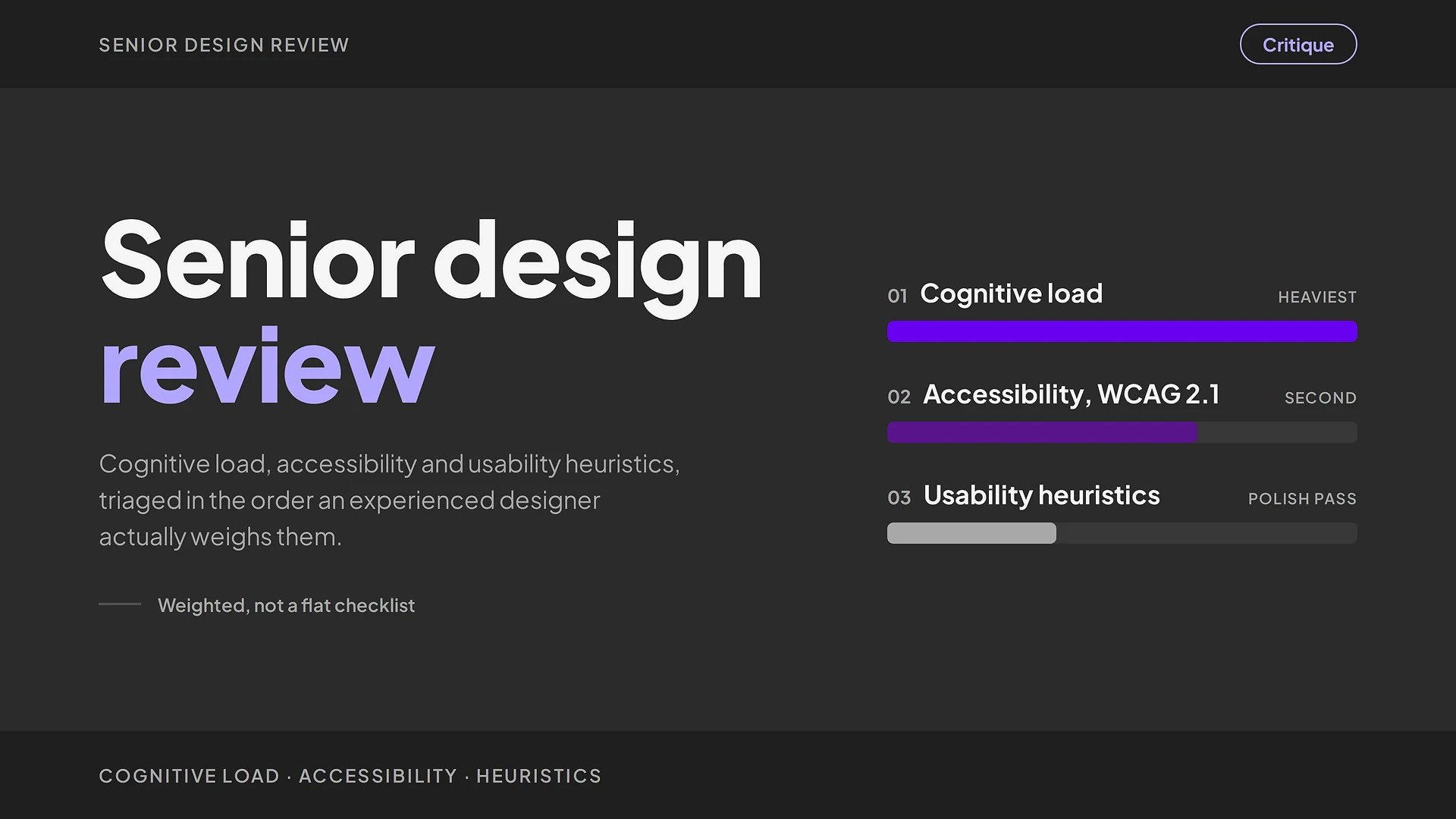
Two skills, built as personal tools from August 2025. Senior Design Review triages a screen the way an experienced designer actually weighs feedback, not as a flat checklist:
- Cognitive load, the heaviest weight, since confusion loses more users than any single miss.
- Accessibility, WCAG 2.1 A/AA, second.
- Usability heuristics, a polish pass catching what the first two miss.
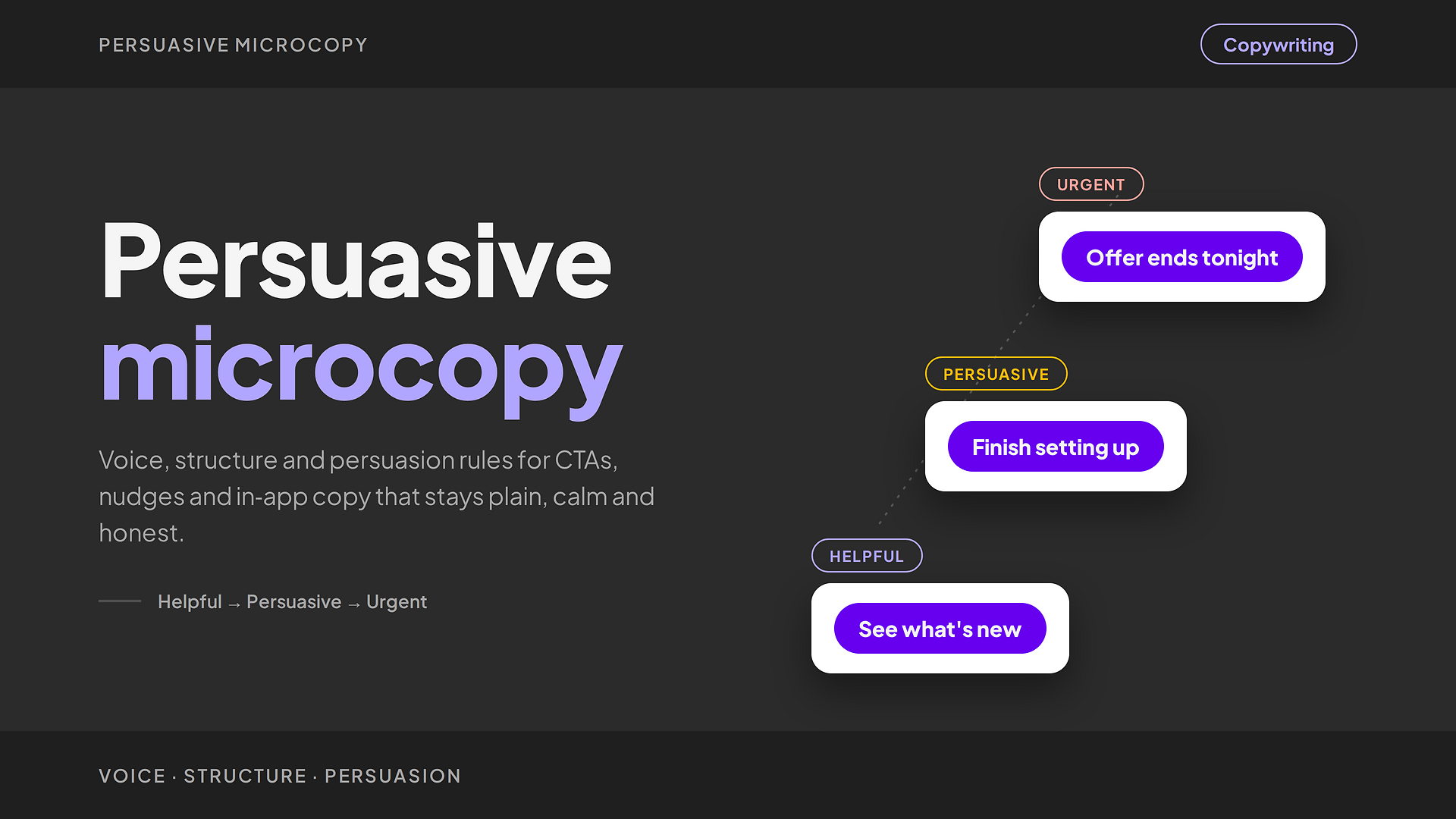
Persuasive Microcopy, built on BJ Fogg's Behavior Model (motivation, ability, prompt):
- Voice/style rules and a message structure for CTAs and notifications.
- A three-message tone ladder: helpful → persuasive → urgent.
- Fogg's seven persuasion tools, mapped to what a button or nudge actually says.
Both evolved from ChatGPT to Gemini to native Figma skills, used solo for six months before either shipped publicly.
From Personal Tool to Public Artifact
- Treated as a real product, not a personal script: a category each (Generation, Critique), pitch-style taglines, a matching visual system per listing.
- Shipped tagline: "Get a senior designer's review of your work: what to fix first, and why" — the "and why" turns a checklist into a pitch.
- Caught a real bug making the marketing images: red text at 3.5:1 contrast, failing the skill's own WCAG threshold. Fixed with a salmon at 7.5:1.
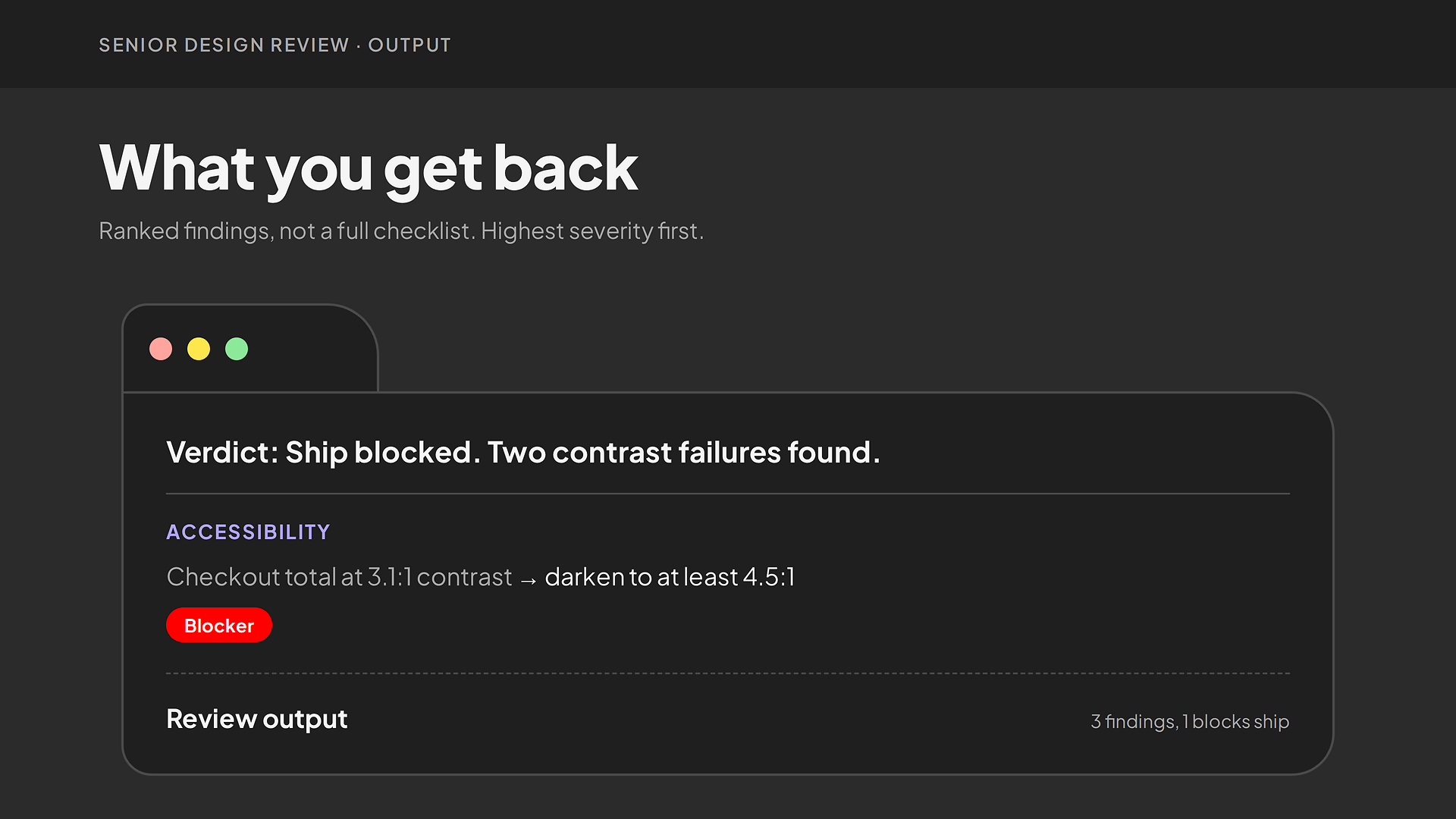
Output format: a verdict first, then findings ranked by priority
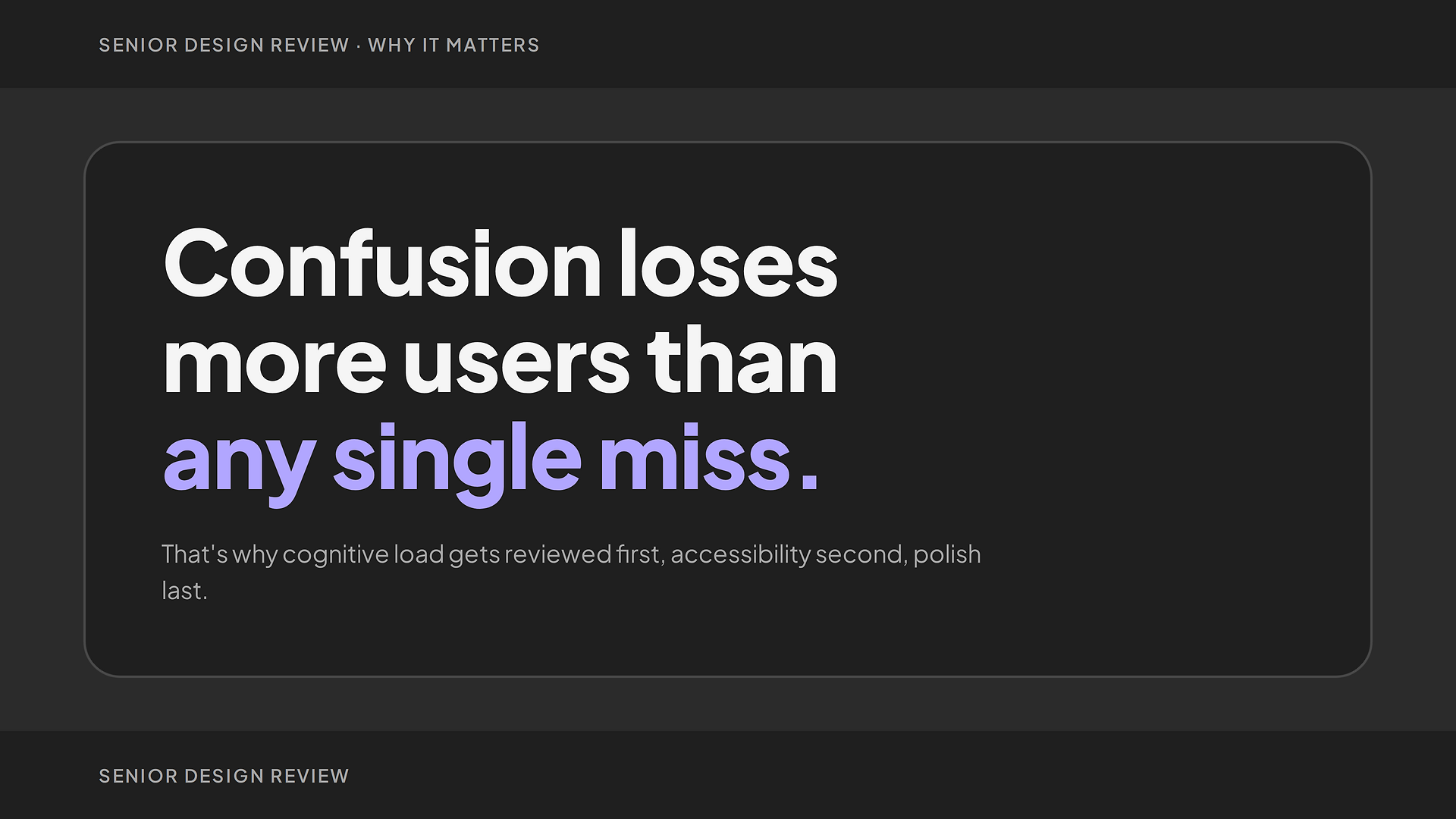
Each finding carries a reason, so the review explains why as well as what
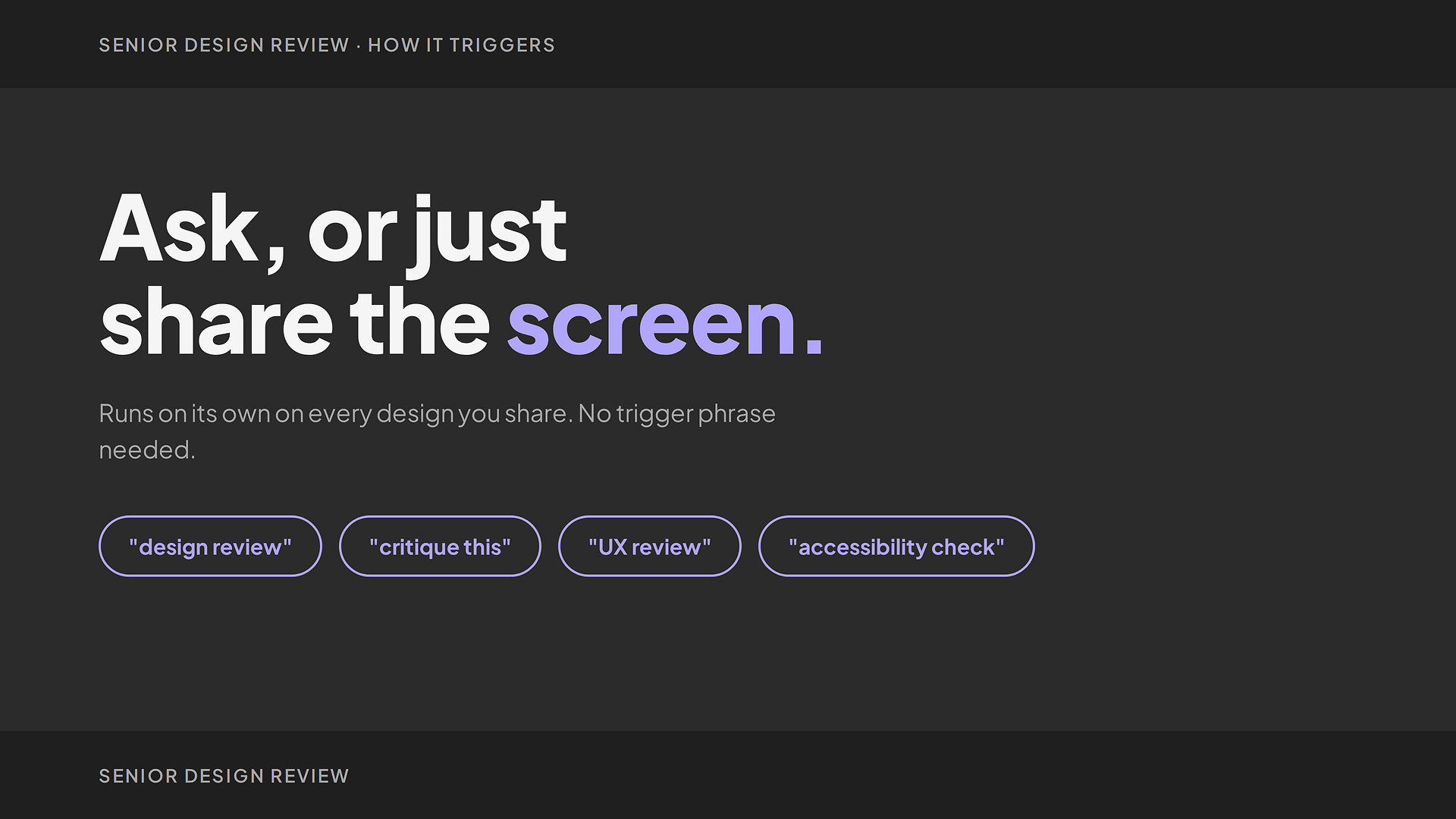
The skill runs automatically when a design is shared
Persuasive Microcopy listing cover
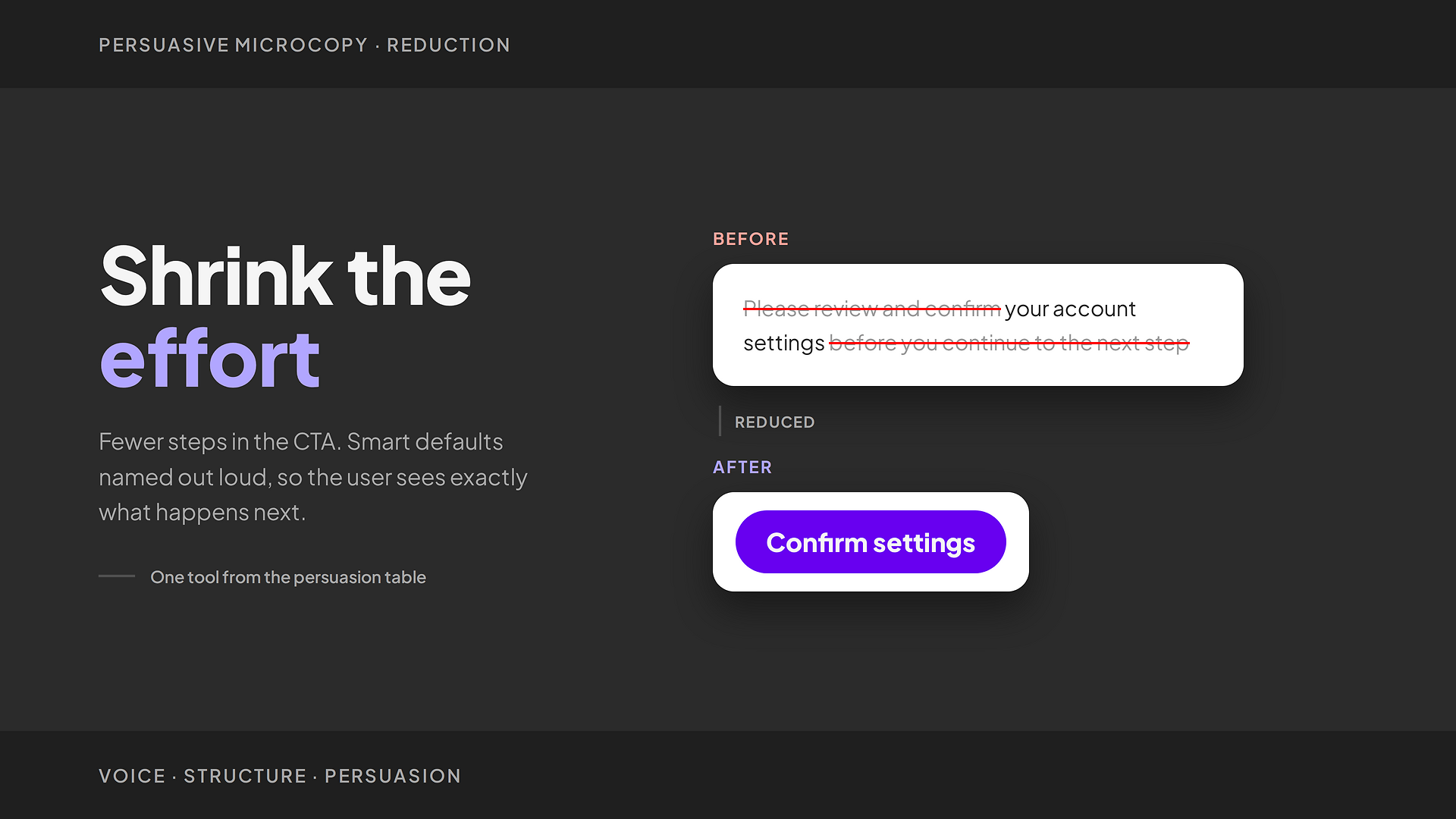
A CTA before and after edit, applying the Reduction persuasion tool
Persuasive Microcopy and Senior Design Review are both live on Figma Community.
The Impact
2
skills on Figma Community
~6 months
in personal use first
Self-directed
not commissioned
